Your cart
There are no more items in your cart

Heras banner - 330x170 cm
€76.50
In stock
Call from Monday to Friday
8:30 a.m. to 5:30 p.m.
(BE) +32(0)71 25 85 81
(LU)+352 20 30 15 72
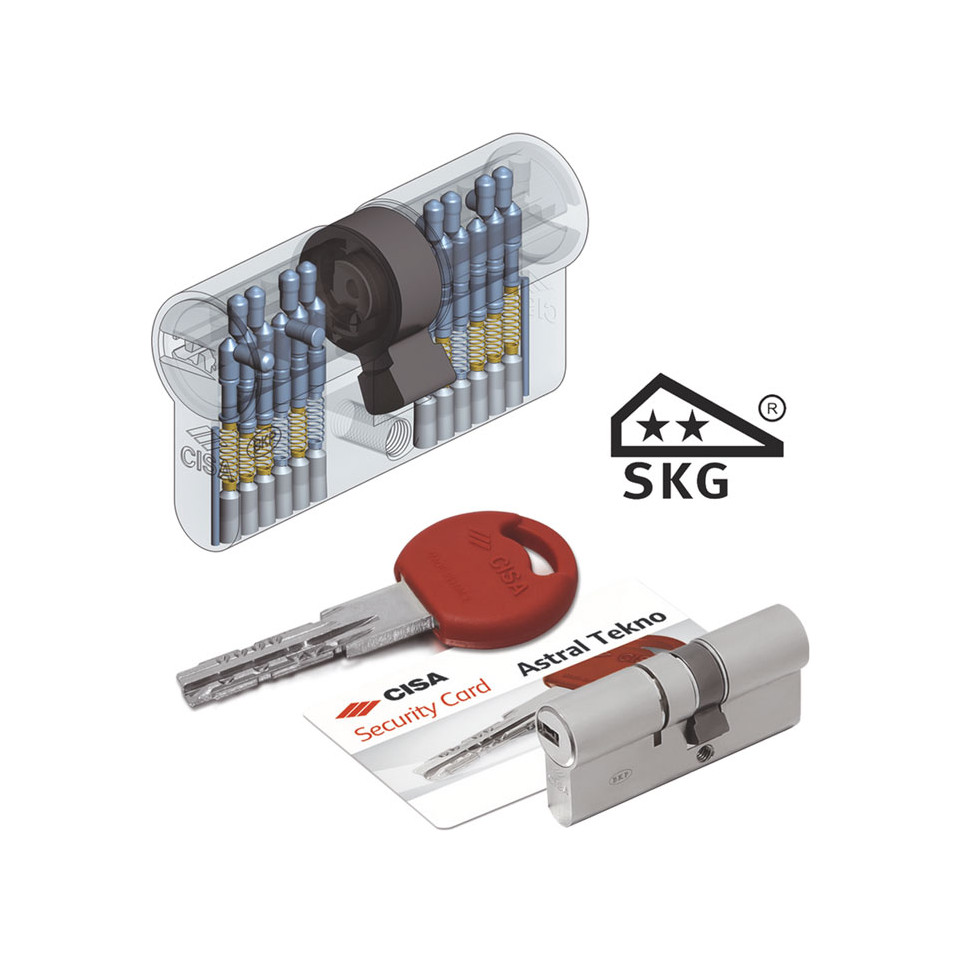
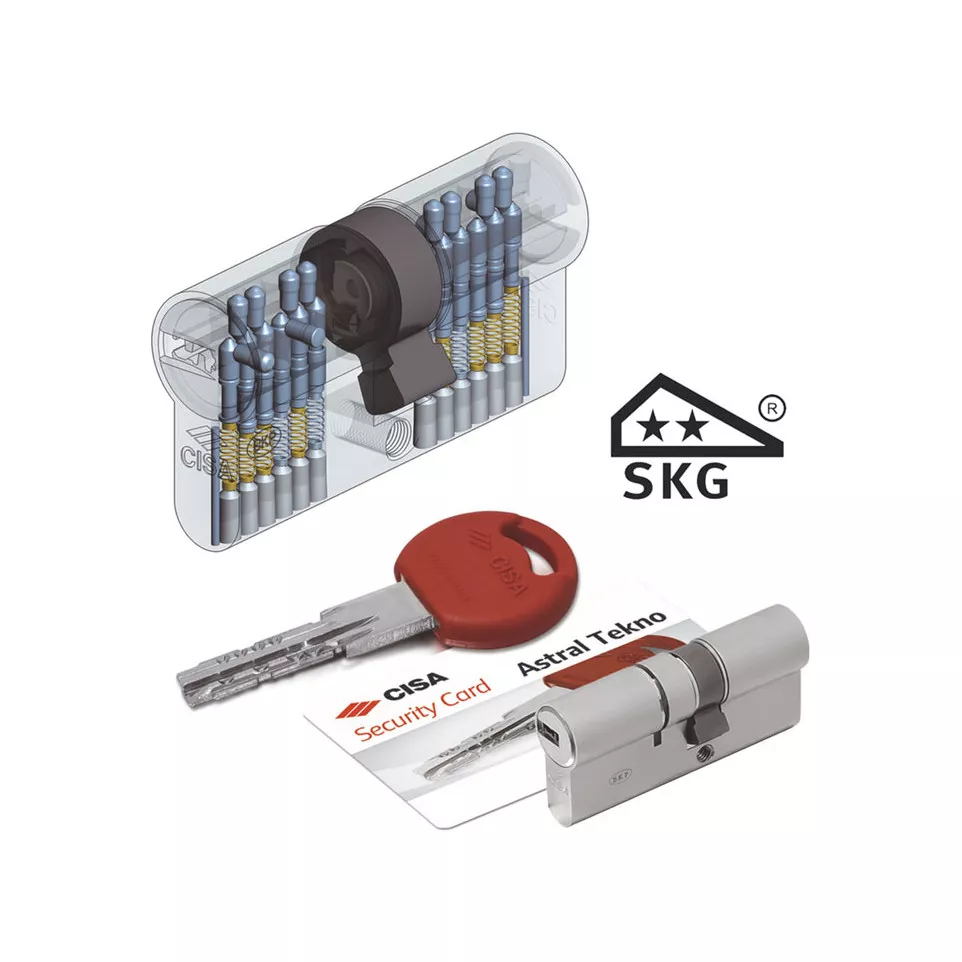
Designed for high-security access control, the Cisa TEKNO double half-cylinder is intended for external and internal doors where advanced mechanical protection and controlled key duplication are required, such as in residential, commercial, or institutional buildings.
The user inserts an authorized CISA Tekno flat reversible key into either side of the cylinder. The advanced bitting system engages precisely aligned pins within a dual-row design. When properly aligned by the correct key, it permits rotation of the lock cam to operate connected door hardware securely from both sides—even if a second authorized key remains inserted on the opposite side.
| Brand | Cisa |
|---|---|
| Description | demi-cylindre |
| Dimensions indoor. / outdoor. (mm) | 30/10 |
| Cylinder function | ordinaire |
| Key shape | plate |
| Copy security | à vie |
| Break and Enter Security (SKG) | SKG2** |