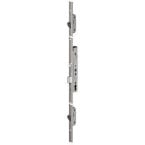
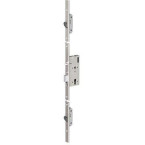
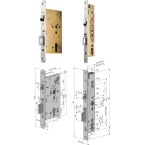
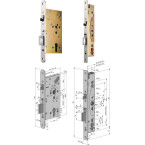
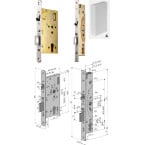
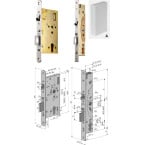
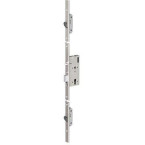
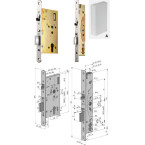
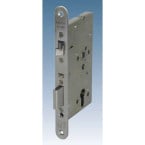
Usage
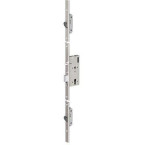
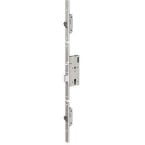
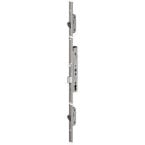
The Abloy EL420 motorized mortise lock is designed for high-traffic interior or exterior doors in public, commercial, institutional, and residential buildings requiring advanced access control, fire resistance, and secure exit functionality.
Advantages
- Electrically controlled locking suitable for integration with access systems (card readers, keypads, remote buttons)
- Self-locking and automatic deadbolt engagement upon door closure for enhanced security
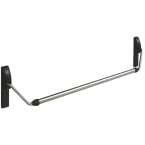
- Panic exit: immediate mechanical opening from inside at any time (complies with emergency exit requirements)
- Continuous monitoring outputs enable real-time status feedback on bolt position and other parameters
- If power fails while locked, the door remains secure but always allows safe egress via handle from inside; minor drawback: remains locked from outside during power loss
Specifications
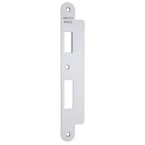
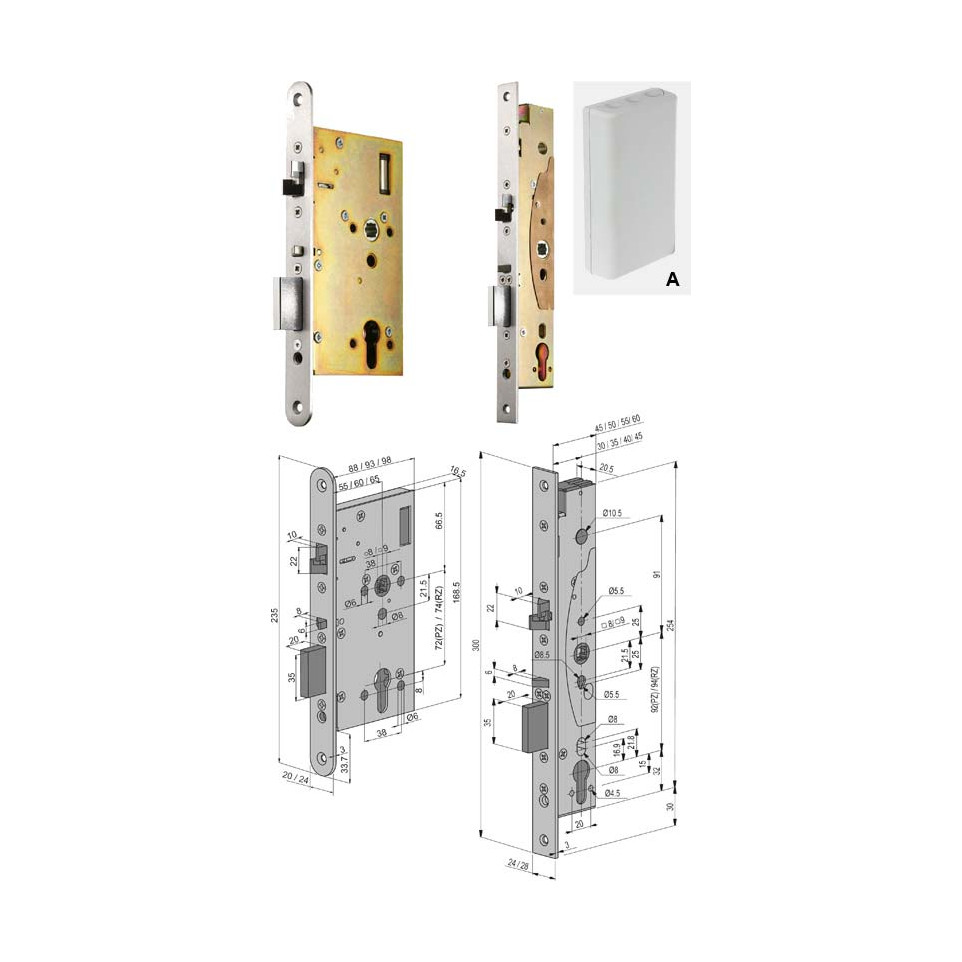
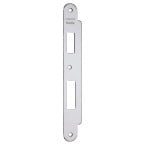
- Design: DIN Europrofile mortise lockcase; reversible handing; stainless steel faceplate; suitable for wooden or metal narrow-profile doors (backset options: 30/35/40/45 mm); double action latch bolt plus deadbolt (20 mm throw)
- Durability & Certifications: Fire rated per EN14846; compliant with EN179 (emergency exits) and EN1125 (panic exits); operates in temperatures from -20°C to +60°C; daily use of over 200 cycles possible[1][3]
- Performance Data: Operating voltage: 12–24 V DC ±15% /12–18 V AC. Idle current: ~80 mA at 12VDC / ~40 mA at 24VDC. Max drive current: up to approx. 1.3 A at start-up[1][4]. Bolt extension/retraction within approximately 0.7 seconds[1]. Relay monitoring contact rating: max. 0.8 A /30 V.
- Differentiators: Day/night mode selection permits flexible security levels (“day” open/free passage vs “night” secure mode). Multiple integrated monitoring contacts signal door position/mode changes to connected systems.[2][3]
How it works
The motorized mechanism withdraws or extends the deadbolt in response to electric control signals—such as those from card readers or building management systems—while permitting free mechanical opening by handle from the inside at all times for safety compliance. Upon closing the door, locking is automatic without user intervention.[1][3]